

You must surely remember Belle’s bell jar which shelters the magnificent enchanted rose, a very important element from the movie Beauty and the Beast, which is in fact a curse – it said if the beast doesn’t find love until the last petal falls, he is doomed to remain a beast forever.

BIANCA SUCIU Foto: Andrei Ţiburcă
However, have you ever wondered how would you feel like sitting inside a bell jar? Just like the rose, probably your petals would fall one by one. Would they? Sylvia Plath talks about and describes in each little detail how it feels like to live under a bell jar for a lifetime in her only novel, The Bell Jar.
The Bell Jar is an autobiographical novel in which the protagonist is Esther Greenwood who, long story short, is just Sylvia’s alter ego. It was originally published under the pseudonym “Victoria Lucas” in 1963, the year Sylvia committed suicide.
Summary
Esther spends a month as a guest editor in New York, where she struggles with a desperate desire of having fun just like her fellows who’d also had the same destiny as hers. When Esther comes back home, she is deeply troubled by something she called a “mysterious force inwards”. She later realized that she couldn’t write or read anymore. She also had insomnia due to the chaos in her mind and soon she gets to see a psychiatrist and receives electroshock treatment and starts considering suicide. She tries a lot of alternatives and she almost succeeds in killing herself by swallowing a large quantity of sleeping pills. At last, Esther finds a psychiatrist whom she can trust and after some time, she “checks out” from the mental hospital.


Themes
The role of women in the 1950s
Sylvia couldn’t stand that men had the most interesting jobs and went to all interesting places while women were only to stay at home, taking care of the entire house and children.
Death and rebirth
We could say that just like the Phoenix, Esther through the book, goes from being merely dead on the inside and suffering a lot due to her failure in attempting suicide to slowly recovering both her body and soul.
Read this approach in its entirety in the upcoming issue of LOGO TIMES, which is currently being processed.
BIANCA SUCIU
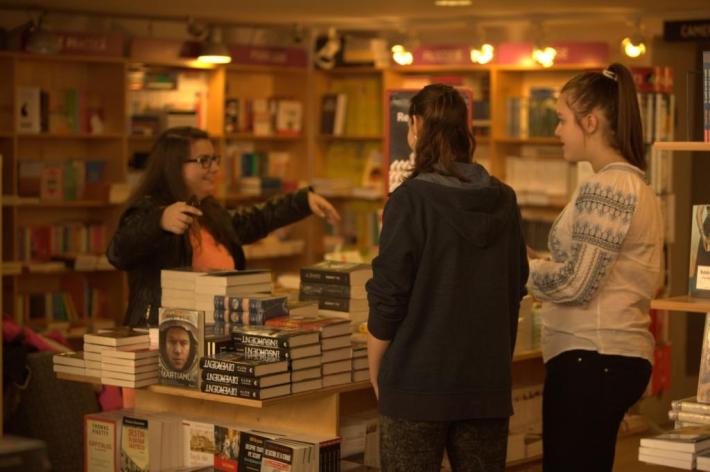
Foto: Andrei Ţiburcă


 LOGO paper